Check if an SMS is a scam, free
Paste any message you were sent (a bank alert, a KYC warning, a refund or delivery link) and EnfoldAI checks it against live Indian fraud data. You get a verdict and the reasons behind it. No sign-up, no app needed.
Paste a message above to turn on the check.
✔ Free✔ No ads
How to check if a message is fake
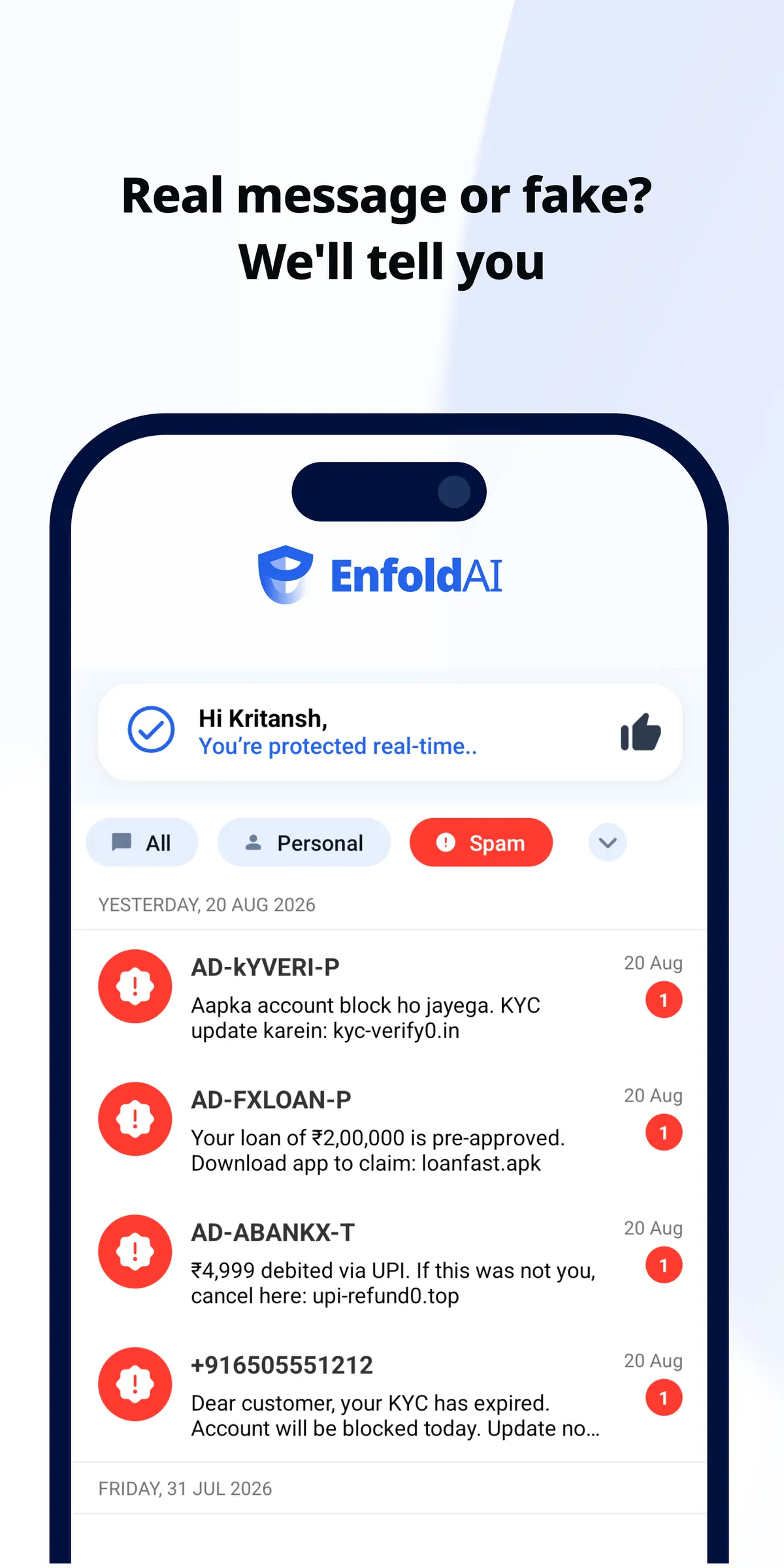
Look at four things: who sent it, where the link goes, what it asks for, and how urgent it sounds. Real banks and government services never ask for OTPs or payments over SMS links.
Check the sender ID
Real senders use registered headers like AD-SBIBNK. Personal numbers (+91-XXXXX…) sending "bank" messages are a red flag.
Check the link domain
parivahan.gov.in is real; parivahan-echallan.top is not. New or odd domains (.top, .xyz, hyphenated brand names) are typical of scams.
Check what it asks for
OTP, UPI PIN, card number, "small refundable fee", no genuine bank, courier or government office asks for these over SMS.
Check the pressure
"Account blocked TODAY", "pay in 2 hours": manufactured urgency is the oldest scam signal. When rushed, stop and check here first.
How to check a fake message
Paste the message into the box above: include the sender ID.
Press "Check now": EnfoldAI compares it against live Indian fraud data.
You get a verdict (High risk, Suspicious or Looks clean) with the reasons.
Real bank SMS vs fake bank SMS. The sender ID difference
Registered commercial senders in India use 6-character alphanumeric headers. Scammers use personal numbers or lookalike headers.
Real bank SMS
- Registered DLT header (bank code + category suffix)
- Refers to your masked account number
- Never asks for OTP / PIN; rarely carries links
Fake bank SMS
- Personal mobile number pretending to be a bank
- Generic "Dear customer", urgent threat, same-day deadline
- Link to a non-bank domain asking for login/OTP
Real scam messages, decoded
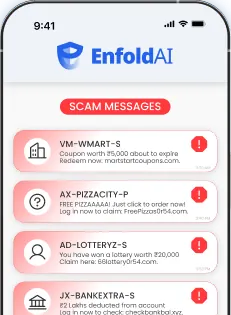
4–6 examples from circulating scams, each with the tell-tale signals marked.
Why: lookalike Parivahan domain · payment demand · registered-sounding header abused.
Why: "receive money" needs no PIN: approving a collect request sends it.
Why: urgency + KYC + link. Banks block accounts by process, not by SMS deadline.
Why: unrealistic daily earnings + Telegram funnel. Task scams start small, then demand deposits.
Why: no agency serves an arrest notice by SMS · a "verification call" is the scam, not a step in one.
Why: an app arriving as a file in chat. Real apps come from the Play Store, never from a link in a message.
Check if a link is safe
Do not tap a link to find out where it goes. Send it to EnfoldAI on WhatsApp and we will check where it really leads, free, no app needed.